Choosing Elegant Bathroom Accessories is not simply a matter of matching colors or following a luxury trend. Buyers need to consider daily use, material quality, installation, maintenance, and long-term comfort. A brushed brass towel rail may look beautiful beside a marble basin, yet fingerprints and water marks can quickly change its appearance. Practical elegance must survive real bathroom conditions.
Experienced buyers usually examine details that product photos hide. Check the thickness of metal, the smoothness of edges, the strength of mounting hardware, and the reliability of the finish. Stainless steel, solid brass, and carefully treated aluminum can offer different benefits in humid environments. However, no material is completely maintenance-free. That assumption deserves reconsideration. A well-designed soap dispenser should be easy to refill, while a toilet brush holder should conceal moisture without trapping unpleasant odors. Small details matter.
Professional interior designers also recommend viewing accessories as a coordinated system rather than isolated decorations. Towel hooks, shelves, robe holders, and mirrors should share a balanced visual language. Measure available wall space before purchasing, especially in compact bathrooms where a few centimeters can affect movement. Buyers should compare supplier specifications, warranty terms, cleaning instructions, and verified customer feedback. Reliable brands explain their materials and installation requirements clearly. They do not rely only on polished images.
Elegance is personal. It should feel calm, useful, and durable in everyday life. The right choice may be less dramatic, but more dependable. That is often the better investment.
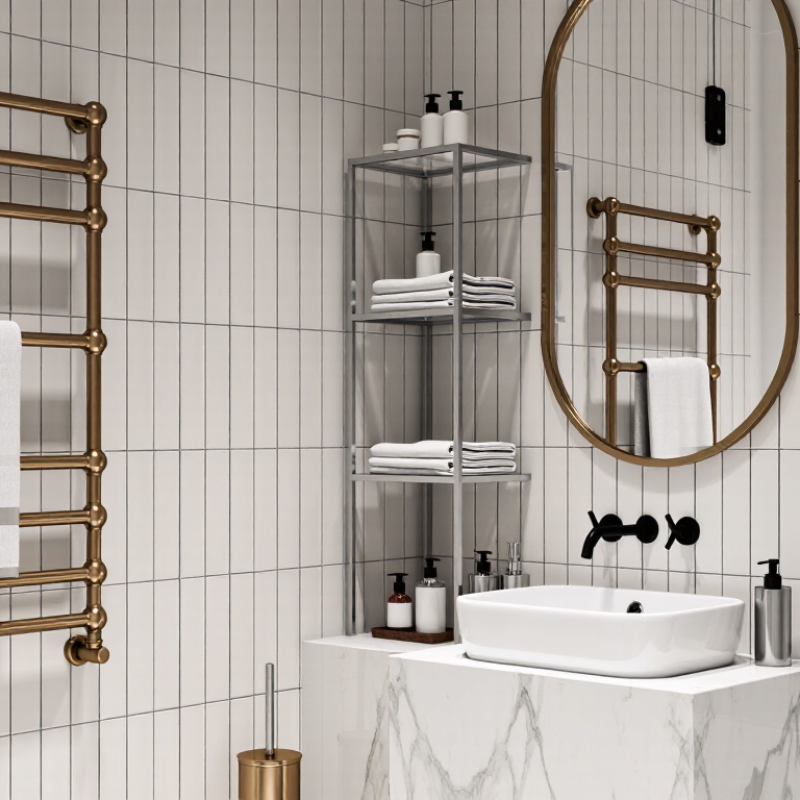
Elegant bathroom accessories begin with a clear style direction, not isolated decoration. Modern spaces suit slim silhouettes, matte finishes, and clean edges. Transitional bathrooms welcome curved profiles, brushed metal, and restrained ornament. Natural styles feel warmer with stone textures, pale wood tones, and woven storage. Hotel-inspired rooms often use symmetrical towel bars and carefully spaced fixtures. The style should support daily movement. A beautiful tray becomes useless when it blocks the sink.
When I assess a bathroom, I study its light, wall color, and traffic path. Cool lighting can make polished metal look harsh. Soft lighting may flatter warmer finishes. Measure the vanity before choosing soap dispensers or countertop containers. Leave enough space for wet hands and cleaning cloths. Wall-mounted accessories can protect limited counter space, but drilling requires accurate placement. Check the mounting method, material thickness, edge quality, and resistance to moisture. These details reveal more than photographs.
Reliable selection also depends on consistent finishes. Mixing two metal tones can work, yet random combinations quickly look accidental. Choose one dominant finish and repeat it across three or four pieces. I once favored a delicate holder that looked elegant but felt unstable during use. That mistake changed my buying checklist: appearance, grip, load, and maintenance must be judged together. Avoid overly complex shapes. Dust collects in narrow grooves, and polished surfaces show water marks quickly. Elegant does not always mean practical. Sometimes the quieter, slightly imperfect piece serves the room better.
Choosing elegant bathroom accessories starts with the material, not the surface shine.
In my sourcing experience, solid brass, stainless steel, and quality ceramic perform differently in humid rooms. Check the specification sheet for the alloy grade, coating method, and care instructions. A heavy feel can help, but weight alone proves little. Look for clean threads, even joints, and smooth edges. Tiny flaws matter.
Durability depends on daily contact with water, soap, and cleaning agents. Ask how the finish was tested for corrosion, adhesion, and repeated use. Reliable suppliers should provide test records, dimensional details, and a clear warranty. Inspect the mounting hardware, too. Thin screws or soft anchors can loosen behind tiles. For wall-mounted pieces, confirm the load rating and installation surface before purchase. This is practical, not decorative.
Quality also appears in the details users touch. A towel bar should feel rigid, while a dispenser should press smoothly without leakage. Compare samples under bright light; uneven plating often hides in a showroom. I once approved a beautiful set with weak brackets, and replacing them cost more than expected. That mistake changed my checklist. I now test alignment, movement, and cleaning access before judging style. Details matter. Some finishes need frequent wiping, which may disappoint busy buyers. Elegant design becomes less convincing when maintenance feels frustrating.
How to Choose Elegant Bathroom Accessories for Buyers?
Elegant accessories should follow the bathroom’s layout, not fight against it. In a narrow room, choose wall-mounted storage, slim towel rails, and a rounded mirror. These pieces protect walking space and soften hard corners. In a large bathroom, matched containers, double towel bars, and a wide mirror can create visual balance. I once selected a beautiful oversized tray for a compact vanity. It looked refined, but reduced usable counter space. That mistake still matters.
Tips: Measure before buying. Keep at least 60 centimetres of clear floor space near the main route. Match finishes with care. Brushed metal suits calm, modern interiors, while warm brass can support classic or spa-inspired designs. Repeating one finish three times often feels intentional. Still, perfect matching may look flat. A small contrast can add character.
Function should remain visible in the design. The U.S. Environmental Protection Agency’s WaterSense specification limits bathroom faucets to 1.5 gallons per minute, using at least 30% less water than standard models. This makes efficient fittings a practical accessory choice, not merely a style decision. The U.S. Department of Energy reports that LED lighting uses at least 75% less energy than incandescent lighting. Use layered light around the mirror, ceiling, and shower zone. The 2024 NKBA Design Trends Report also highlights storage and wellness-focused features. However, trends can age quickly. Choose durable materials, easy-clean surfaces, and accessories that still make sense five years later.
| Bathroom Layout | Accessory Category | Recommended Size or Capacity | Best Placement | Suitable Finish and Material | Design-Matching Advice | Practical Selection Notes |
|---|---|---|---|---|---|---|
| Compact powder room | Towel ring and toilet-roll holder | Towel ring: approximately 150–200 mm diameter; roll holder: approximately 130–160 mm wide | Beside the basin and within easy reach of the toilet | Brushed stainless steel, chrome, or slim powder-coated metal | Choose compact, wall-mounted forms to preserve visual space | Avoid deep shelves and oversized towel bars that can obstruct movement |
| Small shower room | Shower shelf and robe hook | Shelf depth: about 100–150 mm; single hook projection: about 45–65 mm | Shelf in a dry, reachable shower zone; hook outside splash areas | 304 stainless steel, anodized aluminum, or glazed ceramic | Use a simple geometric profile that complements clear glass and light tile | Provide drainage or ventilation around shelves to reduce standing water |
| Family bathroom | Double towel bar and storage basket | Towel bar: approximately 600–800 mm; basket depth: approximately 250–350 mm | Near the shower or bathtub, with storage close to the vanity | Satin stainless steel, treated brass, bamboo, or moisture-resistant composite | Coordinate the bar shape with cabinet handles and faucet geometry | Select durable surfaces that tolerate frequent cleaning and daily use |
| Large primary bathroom | Freestanding stool, towel ladder, and accessory tray | Stool height: approximately 450–500 mm; towel ladder width: approximately 450–600 mm | Dry area beside the vanity, tub, or dressing zone | Sealed natural wood, powder-coated metal, stone, or tempered glass | Layer textures while keeping the dominant metal finish consistent | Keep freestanding pieces outside circulation paths and wet splash zones |
| Minimalist bathroom | Linear shelf and concealed toilet-roll holder | Shelf depth: approximately 100–140 mm; keep projections visually minimal | Aligned with tile joints or installed beneath a mirror | Matte black, brushed nickel, or satin stainless steel | Repeat straight lines and use one dominant finish for a calm appearance | Check fixing depth before installation, especially on tiled walls |
| Traditional or classic bathroom | Wall-mounted soap dish, glass tumbler, and towel rail | Soap dish width: approximately 110–150 mm; towel rail: approximately 450–600 mm | Around the basin and along the nearest clear wall | Polished chrome, aged brass, ceramic, or clear glass | Favor curved profiles and coordinated detailing rather than mixed styles | Use materials with sealed surfaces and clean them with non-abrasive products |
| Industrial-style bathroom | Open metal shelving and exposed towel bar | Shelf depth: approximately 180–250 mm; towel bar: approximately 600 mm | On an open wall away from direct water spray | Black powder-coated steel, brushed steel, or sealed reclaimed wood | Combine practical open storage with restrained, durable hardware | Inspect coating quality and prevent unprotected steel from prolonged moisture |
| Accessible bathroom | Grab bars, lever-operated accessories, and adjustable hand shower support | Grab-bar dimensions and mounting heights must follow local accessibility regulations and site conditions | Along transfer routes, beside the toilet, and within the bathing area | Corrosion-resistant stainless steel with a secure, easy-grip surface | Use a consistent finish while prioritizing contrast, grip, and safe clearances | Have structural fixing and final positioning reviewed by a qualified professional |
Planning note: Dimensions are typical selection ranges for design planning. Confirm final clearances, fixing requirements, load ratings, and accessibility provisions against the bathroom plan and applicable local building standards.
Elegant bathroom accessories should earn their place through daily performance, not appearance alone. During product checks, I look at towel bars, shelves, and dispensers at arm’s reach. A beautiful surface becomes frustrating if wet hands cannot use it safely. Choose rounded edges, firm mounts, and enough clearance from sinks, doors, and shower spray. Small details matter.
Functionality should match the room’s traffic. A family bathroom needs storage that tolerates frequent handling, while a guest bathroom may need fewer pieces. Check weight limits, mounting hardware, and whether replacement parts are available. I once favored a slim shelf that looked spacious in photographs. It sagged under full bottles. That mistake reminded me to test real loads, not trust styling.
Maintenance and installation deserve equal attention. Smooth, sealed surfaces usually clean faster than deep grooves or delicate finishes. In hard-water areas, inspect corners where mineral deposits collect. Confirm wall materials before drilling, especially around tiled surfaces and concealed pipes. Adhesive mounting can suit light accessories, but it may fail on dusty or uneven walls. Screw fixing takes longer and leaves holes, yet it often provides steadier support. I still find installation instructions too vague sometimes. Buyers should measure twice, check the tools required, and allow access for future cleaning.
How to Choose Elegant Bathroom Accessories for Buyers?
Elegant bathroom accessories should balance appearance, durability, and purchasing confidence. Buyers should assess suppliers before admiring polished photographs. Request physical samples, finish swatches, and accurate dimension sheets. A brushed surface may look refined online but reveal uneven edges under bright bathroom lighting. Check mounting hardware, material thickness, corrosion resistance, and cleaning instructions. These details show whether the supplier understands daily bathroom use.
Price comparison needs more than a unit-cost table. Include sample fees, packaging, shipping, replacement parts, and possible customization charges. A very low quotation may exclude protective packaging or quality inspection. Ask for a clear quotation with payment stages and delivery dates. Compare similar specifications, not merely similar designs. I still see buyers choosing the cheapest option, then paying more for damaged pieces and delayed installations. That decision deserves closer reflection.
Buyer service support often separates a dependable supplier from a pleasant-looking listing. Test the response before ordering by asking three practical questions. How quickly do they answer? Can they explain production tolerances? Will they provide photos before shipment? Reliable teams document issues and offer specific remedies. Request a written sample approval, inspection record, warranty scope, and replacement process. Communication should remain clear when a problem appears. No vague promises. A supplier may be elegant in presentation but weak in after-sales care. That weakness becomes visible when a small bracket fails during installation.
For an immediate response, please call this
number 45038523
Price: