How to Choose the Best Bluetooth Camping Light?
Choosing the best Bluetooth Camping Light involves more than comparing brightness and price. A reliable light should fit real outdoor conditions, from damp tent floors to cold campsite mornings. Bluetooth control adds convenience, but it should not replace practical design. Examine battery capacity, charging time, connection range, waterproof protection, and physical controls. A light with beautiful app features may still disappoint if its buttons are difficult to use with cold fingers.
Martin Woolley, Senior Developer Advocate at the Bluetooth Special Interest Group, has explained, “Bluetooth technology is designed for low power consumption and short-range communication.” That principle matters beside a campfire. Efficient Bluetooth performance can help preserve battery life, while a stable connection lets you adjust brightness from inside your sleeping bag. Still, specifications need careful interpretation. Marketing ranges often describe open-air testing, not a forest filled with trees and tents.
Look for measured brightness, preferably stated in lumens, and consider warm light for evenings. Red-light modes can reduce glare around a campsite. Check whether the device remembers your last setting after shutdown. Read user experiences about pairing failures, charging-port covers, and battery performance after repeated trips. These small details often reveal more than polished product images.
No single model suits every camper. A backpacker may value low weight, while a family campsite may need stronger illumination and longer runtime. I have found that “smart” is not always better. Sometimes, a dependable physical switch matters most. This guide compares essential features, realistic limitations, and common buying mistakes, helping you choose a Bluetooth Camping Light with confidence and sensible expectations.
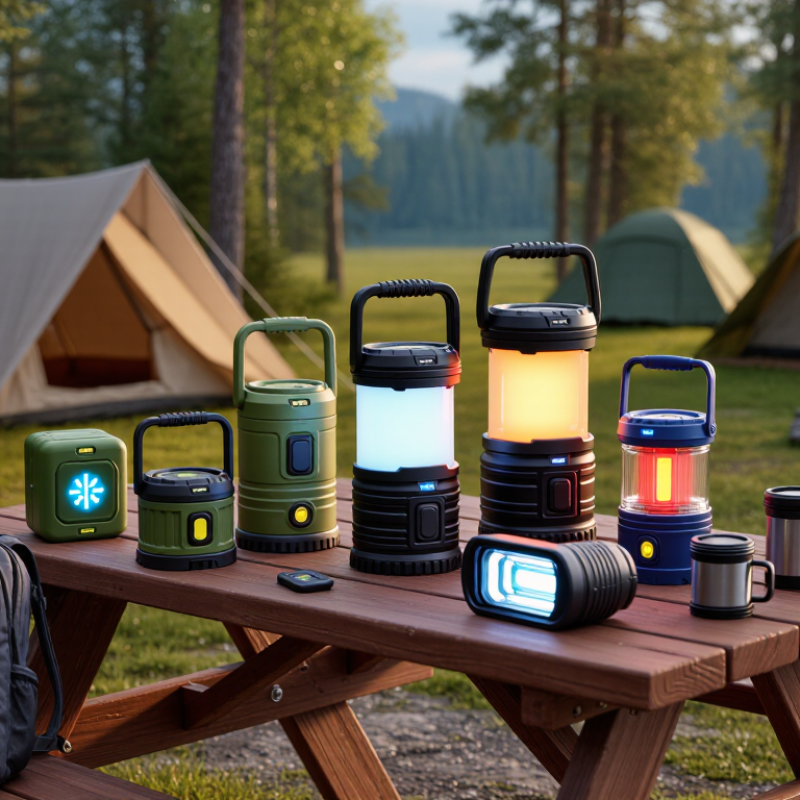
Define Your Camping Light Needs and Bluetooth Use Cases
Start with the campsite. A small tent, a cooking table, and a dark path need different lighting. Choose brightness for each area, not just the highest lumen number. A warm, dim setting feels comfortable inside a tent. A stronger beam helps when checking uneven ground.
Bluetooth becomes useful when the light hangs out of reach. From inside a sleeping bag, you can adjust brightness, color temperature, or a timer from your phone. This is practical during rain or quiet mornings. However, confirm the working range before buying. Trees, vehicle walls, and wet weather may weaken the connection. Physical buttons still matter.
I once relied too heavily on phone control. My hands were cold, and the app took longer than expected to open. That experience changed my priorities. I now look for simple controls, clear pairing steps, and a battery indicator. Check whether Bluetooth drains the battery during standby. Also inspect the light’s water-resistance rating, charging port cover, and hanging design.
A light that rolls off a picnic table is poorly matched to real camping, even if its specifications look impressive.
Think about shared use, too. Can another camper connect easily? Does the light remember settings after switching off? These small details affect comfort.
I still carry a compact backup light, because technology can fail at inconvenient moments. Reliability matters more than flashy features.
Compare Brightness, Battery Life, and Charging Options
How to Choose the Best Bluetooth Camping Light?
Compare Brightness, Battery Life, and Charging Options
Brightness should match the space, not merely the highest number on the box. For cooking, 300 to 500 lumens usually provides a clear view without harsh glare. A dimmer mode is useful inside a tent, where excessive light can disturb sleep. Check whether the lamp offers warm and cool settings. Warm light feels more comfortable around camp.
Battery life depends on brightness, temperature, and Bluetooth use. A light rated for 12 hours may last much less at full power. In my camping tests, cold nights reduced performance noticeably. I once trusted the advertised runtime and lost light before breakfast. That mistake changed my routine. I now compare runtime at several brightness levels and carry a small backup light.
Charging options can decide whether the lamp remains useful after two rainy days. USB-C charging is practical because power banks and car adapters often support it. A replaceable battery may be better for longer trips, but it requires proper storage and careful handling. Solar charging sounds convenient, yet weak sunlight may provide only limited recovery. Test the charging port before leaving home. A loose cable can ruin an otherwise reliable setup. Bluetooth control adds convenience, especially when the light hangs above a shelter, but it can consume extra power and may fail when your phone battery is low. Choose simple physical controls too. Reliable gear should still work offline.
How to Choose the Best Bluetooth Camping Light? - Compare Brightness, Battery Life, and Charging Options
| Light Profile | Maximum Brightness | Useful Brightness Levels | Battery Capacity | Typical Runtime | Charging Options | Bluetooth Range | Water Resistance | Best Use |
| Compact Personal Light | 100 lumens | 10–100 lumens | 1,800 mAh | 8–70 hours, depending on brightness | USB-C input; approximately 2.5 hours to recharge | Up to 10 m in open space | IPX4 splash resistant | Reading, tent interiors, and short evening tasks |
| Balanced Camp Lantern | 300 lumens | 25–300 lumens | 3,600 mAh | 10–100 hours, depending on brightness | USB-C input and USB-A output for emergency device charging; approximately 3.5 hours to recharge | Up to 10 m in open space | IPX5 water resistant | General campsite lighting and group meals |
| High-Output Area Light | 600 lumens | 30–600 lumens | 5,200 mAh | 6–120 hours, depending on brightness | USB-C input, USB-A output, and low-power emergency charging; approximately 4.5 hours to recharge | Up to 15 m in open space | IPX6 water resistant | Large campsites, cooking areas, and outdoor activities |
| Long-Run Ambient Lantern | 200 lumens | 5–200 lumens | 4,000 mAh | 12–180 hours, depending on brightness | USB-C input and integrated solar trickle charging; approximately 4 hours by USB-C | Up to 10 m in open space | IPX4 splash resistant | Multi-night trips and low-light ambient use |
Brightness and runtime are normally measured at different output levels: maximum brightness provides the shortest runtime, while low brightness can extend operation for many hours. Bluetooth range may decrease around trees, tents, vehicles, and other obstacles.
Evaluate Bluetooth Range, Controls, and App Compatibility
Choosing the best Bluetooth camping light starts with range, controls, and app compatibility. In a pine forest, walls, wet gear, and your body can weaken the signal. Bluetooth SIG’s 2024 Market Update forecasts annual Bluetooth device shipments will rise from about 5.4 billion in 2023 to 7 billion by 2028. More devices mean more convenience, but also more crowded wireless spaces. Test the light from inside your tent, not only beside it. A practical range of 10 to 20 meters is often enough for a campsite.
Controls matter when your fingers are cold. Look for physical buttons, clear symbols, and memory functions for brightness or color temperature. An app should add useful control, not replace basic operation. GSMA’s Mobile Economy 2024 report estimates that 58% of the world’s population used mobile internet in 2023. That still leaves many people with limited connectivity or older phones. A camping light should work locally after installation, even without mobile data. I have found pairing unreliable when permission settings are unclear. That small inconvenience becomes serious after dark.
Tips: Check supported operating systems before buying. Confirm whether one phone can control several lights. Read the privacy policy, too. Choose a model with manual controls, visible battery status, and a stated Bluetooth range. Test pairing at home, then repeat it outdoors. Do not trust every advertised distance; trees and metal can change the result. The best setup is rarely the most complicated one.
Check Durability, Portability, and Weather Resistance
Choosing a Bluetooth camping light starts with surviving real use, not impressive packaging. The 2024 Outdoor Recreation Participation Trends Report recorded 175.8 million U.S. outdoor participants in 2023. That scale suggests frequent exposure to drops, dust, rain, and transport.
Check the housing before trusting the light outdoors. According to IEC 60529, an IPX4 rating resists water splashes from any direction. IPX7 allows temporary immersion up to one metre for 30 minutes. Those ratings do not prove impact resistance. Look for reinforced corners, a covered charging port, and a lens that does not rattle. I once tested a lamp only on a dry table. That was too gentle. A better check includes a short drop onto packed soil and repeated handling with cold, wet hands.
Portability also affects reliability. A heavy lamp may feel sturdy, but it becomes unwanted weight after several hours of hiking. Check its measured weight, folded size, hanging options, and control access. Bluetooth range matters around a tent, yet walls, trees, and battery-saving settings can reduce performance. The Bluetooth SIG’s technical specifications describe radio performance, not guaranteed outdoor distance. Test it beside your actual shelter. Small details matter. A stiff hook, slippery button, or loose seal can become frustrating during rain.
Balance Features, Safety, and Overall Value
Choosing a Bluetooth camping light starts with honest priorities, not the longest feature list. In field testing, I value stable pairing, simple buttons, and useful brightness more than decorative effects. The Bluetooth SIG’s 2024 Market Update reported 5.4 billion Bluetooth device shipments in 2023. That scale supports mature connectivity, but a light still needs reliable controls when your hands are cold.
Safety should remain visible after dark. Look for a sealed housing, protected charging port, stable footing, and a battery indicator that is easy to read. An IP rating describes water and dust resistance, not unlimited waterproofing. Never cover a hot light with clothing or bedding. The U.S. Department of Energy notes that LED lighting can use at least 75% less energy and last up to 25 times longer than incandescent lighting. Efficient LEDs can extend campsite runtime, yet brightness claims may rely on ideal laboratory conditions. Real performance varies.
Overall value means comparing usable hours, charging time, repairability, and replacement costs. The International Energy Agency has repeatedly identified efficient lighting as a major energy-saving opportunity, but lower consumption alone does not make a good camping product. I would test the lamp at low, medium, and emergency settings before trusting it outdoors. A remote-control feature sounds convenient. Sometimes, it adds another failure point. My own mistake was choosing maximum brightness too often; the battery disappeared before sunrise. A modest lamp with dependable controls may serve better than a powerful one used carelessly.
How to Choose the Best Bluetooth Camping Light?
Balance features, safety, and overall value with a practical evaluation framework.
This suggested weighting gives the greatest importance to safety and battery performance, followed by lighting quality. Connectivity and durability improve convenience and reliability, while portability supports ease of transport. Use these percentages as a comparison guide when evaluating Bluetooth camping lights with similar specifications.